Art That Walks: How Santiago’s Soul Bleeds Through Its Streets
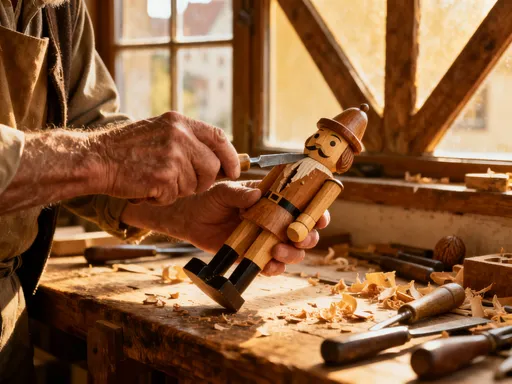
You know that feeling when a city doesn’t just show you art—but lives it? That’s Santiago de Compostela. I didn’t expect medieval stone carvings to feel so alive, or cathedral facades to whisper stories. Every corner here turns faith into form, history into color. It’s not just a pilgrimage end point—it’s a living gallery. Walking its cobbled lanes, I realized: this city is art. And you don’t just see it. You walk through it. This is a place where the past isn’t preserved behind glass but pulses beneath your feet, in the rhythm of footsteps on ancient stone, in the golden glow of candlelight spilling from chapel doors, in the quiet pride of a craftsman shaping wood as his ancestors did. Santiago doesn’t display art. It breathes it.
The Living Canvas of the Old Town
Santiago de Compostela’s historic center, a UNESCO World Heritage site since 1985, functions as one of Europe’s most immersive open-air museums. Unlike curated galleries with timed entries and hushed tones, this city invites touch, movement, and wandering. Its narrow, winding streets—many unchanged since the Middle Ages—form a labyrinth where every turn reveals a new composition of light, texture, and architectural harmony. The city’s visual rhythm emerges not from grand plazas alone but from the cumulative effect of centuries of craftsmanship, where Romanesque solidity, Gothic verticality, and Baroque flourish coexist in seamless dialogue. The stones themselves seem to remember.
Buildings like the Hostal dos Reis Católicos, originally a royal hospital for pilgrims, exemplify this layered artistry. Its Plateresque façade, rich with floral motifs, royal emblems, and delicate tracery, is not merely decorative—it tells a story of care, dignity, and spiritual hospitality. Nearby, the Casa da Parra stands as a quieter testament to domestic artistry, its grapevine-carved doorway a symbol of abundance and Galician identity. These structures are not relics frozen in time; they are lived-in, maintained, and respected. Their weathered surfaces, softened by rain and sun, reflect the passage of generations, each adding subtle marks while honoring what came before.
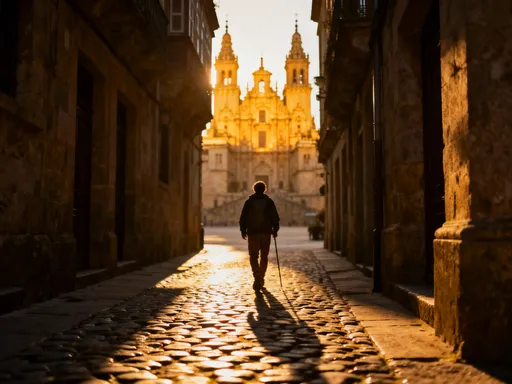
What makes Santiago’s urban fabric truly artistic is the interplay of shadow and illumination. In the early morning, sunlight filters through narrow alleys, casting long, dramatic silhouettes across stone walls. By midday, the golden hue of local granite bathes the city in warmth, making even modest doorways appear radiant. At dusk, lanterns flicker to life, their glow catching in the grooves of centuries-old carvings, briefly animating faces carved in stone. These fleeting moments—unrehearsed, uncurated—are part of the city’s daily performance. There are no admission tickets, no opening hours. The art is always on, always evolving with the light.
Urban design here serves as a silent curator. The irregular street pattern, a product of organic growth rather than formal planning, ensures that the cathedral remains hidden until the final approach—a deliberate dramatic reveal. This architectural suspense heightens the emotional impact of arrival, transforming a simple walk into a narrative arc. Even the cobblestones, worn smooth by millions of pilgrim feet, contribute to the aesthetic, their uneven surface guiding movement, slowing pace, and demanding attention. In Santiago, beauty is not just seen. It is felt through the soles of your shoes.
The Cathedral as Masterpiece
At the heart of Santiago lies its soul—the Cathedral of Santiago de Compostela, believed to house the remains of Saint James the Apostle. More than a place of worship, it is a monumental work of art shaped by faith, time, and human hands. Its western façade, particularly the Praza do Obradoiro side, presents a breathtaking fusion of styles: the late Romanesque base, the ornate Baroque bell towers, and the 18th-century masterpiece, the Acibecharía, which frames the cathedral like a gilded proscenium. But the true artistic core lies within—the Pórtico da Gloria.
Completed in 1188 by Master Mateo and his workshop, the Pórtico da Gloria is one of the most significant Romanesque sculptures in Christendom. This three-arched doorway is not merely an entrance; it is a theological narrative carved in stone. The central tympanum depicts Christ in Majesty, surrounded by the Four Evangelists and the 24 Elders of the Apocalypse, their faces alive with individual expression—some serene, others curious, a few almost smiling. What sets this work apart is its humanity. The figures possess weight, posture, and emotion. The apostles’ robes drape naturally, their hands gesture with purpose, and their eyes seem to follow visitors. This was revolutionary for its time—a departure from rigid iconography toward naturalism and psychological depth.
Master Mateo’s genius extended beyond sculpture. He designed the entire space as a multisensory experience. The columns of the portico are carved with prophets and apostles, their heads at eye level, inviting close inspection. Tradition holds that pilgrims once touched the central column, now worn smooth by centuries of hands—a tactile connection between viewer and artwork. Inside the cathedral, the artistic synthesis continues. The botafumeiro, an enormous thurible that swings from the dome during special masses, transforms incense into kinetic art, its silver flame arcing through the nave like a celestial pendulum. The interplay of light through stained glass, the resonance of Gregorian chant in the vaulted space, and the gleam of gold leaf in the altarpiece all contribute to an environment where art, ritual, and acoustics converge.
The cathedral’s preservation is itself an act of devotion. Over the centuries, restorations have been guided by reverence rather than modern intervention. When repairs are needed, artisans consult medieval techniques, ensuring continuity rather than contrast. This commitment to authenticity allows visitors to experience the cathedral not as a museum piece but as a living tradition. For pilgrims completing the Camino, the first glimpse of the cathedral’s towers is often overwhelming—not just for its spiritual significance, but for its sheer artistic power. It is not a building they see. It is a revelation.
Street Art with Sacred Roots
In Santiago, public space becomes stage, and tradition becomes performance. The city’s religious processions, particularly during Semana Santa (Holy Week), transform the streets into living tableaux of devotion and artistry. These are not tourist spectacles but deeply rooted expressions of community identity, curated by hermandades (brotherhoods) that have maintained their rituals for generations. Each brotherhood has its own insignia, vestments, and route, creating a visual language as precise as any art movement.
The processions unfold in near silence, broken only by the rhythmic tapping of wooden staffs and the soft shuffle of robed feet. Participants carry pasos—elaborate floats bearing lifelike sculptures of Christ, the Virgin Mary, or saints—crafted by master artisans, some dating back centuries. These figures, often draped in real fabric and adorned with silver crowns, are illuminated by rows of flickering candles held by penitents in pointed hoods. The effect is hauntingly beautiful: a slow-moving river of light and shadow, where sorrow and dignity are rendered in sculptural form. The synchronization of movement, the symmetry of the candlelight, and the choreography of entry and exit reflect an aesthetic discipline passed down through oral tradition and meticulous rehearsal.
Equally significant are the secular festivals that blend art and celebration. The Festival of Saint James in late July fills the old town with music, dance, and traditional Galician costumes. Women wear embroidered white dresses with lace mantillas, while men don handwoven capes and wooden clogs. Bagpipes—known locally as gaitas—echo through the plazas, their mournful, reedy tones adding a sonic layer to the visual feast. These events are not reenactments but living continuations of cultural memory, where every stitch, note, and step carries meaning.
What makes these ephemeral events artistically enduring is their transmission. Children grow up watching, then participating, absorbing the codes of color, movement, and symbolism. The artistry lies not only in the floats or costumes but in the continuity of practice. A candlelit procession may last only a few hours, but its visual grammar persists in local consciousness, shaping how residents see their city and themselves. In Santiago, art is not confined to galleries. It walks, it sings, it mourns, and it celebrates—in the streets, among the people.
Artisans Keeping Time Alive
Just steps from the cathedral, in the quiet lanes of Rúa do Franco and Rúa do Vilar, small workshops hum with quiet dedication. Here, stone carvers chip away at granite blocks, woodworkers shape altarpieces, and goldsmiths polish silver filigree with tools unchanged for centuries. These are not souvenir makers but conservators of tradition, entrusted with maintaining the very fabric of Santiago’s artistic heritage. Their work is invisible to most tourists, yet it is essential to the city’s soul.
One such workshop belongs to a fourth-generation stone carver who restores damaged elements of the cathedral façade. Using hand chisels and mallets, he replicates medieval techniques to match the original texture and depth of carving. “You don’t impose your style,” he says. “You listen to the stone, and you follow the old hands.” His apprentices, young men and women from Galicia, learn not from textbooks but through daily practice, guided by masters who value patience over speed. This apprenticeship model ensures that skills are not lost to industrialization or digital fabrication.
Woodworkers nearby specialize in restoring retablos—ornate altarpieces that combine sculpture, painting, and gilding. Their work requires knowledge of historical pigments, wood species, and joinery methods. A single panel might take months to complete, with layers of bole clay, gold leaf, and varnish applied by hand. The result is not a replica but a continuation, a new chapter in an ongoing story. These artisans do not seek fame. Their reward is the knowledge that their hands have preserved something greater than themselves.
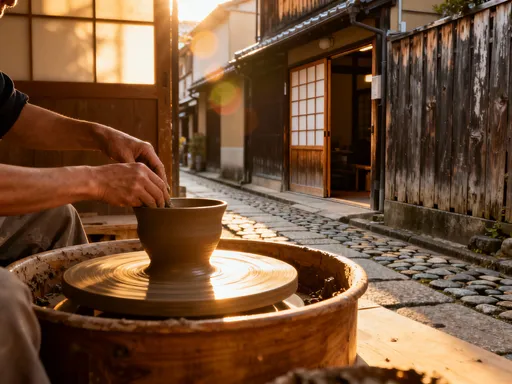
Touching a freshly carved stone or a newly gilded frame in these workshops is a deeply moving experience. The chisel marks are not hidden; they are celebrated as evidence of human effort. In an age of mass production, Santiago’s artisans offer a counterpoint: art as labor, as lineage, as love. Their presence ensures that the city’s beauty is not static. It is renewed, one careful stroke at a time.
The Pilgrim’s Eye: Art Shaped by Journey
The way one sees art depends not only on the object but on the observer. In Santiago, the Camino de Santiago—the network of pilgrimage routes culminating in the cathedral—shapes perception in profound ways. Pilgrims arrive not by car or train but on foot, often after walking hundreds of kilometers. Their bodies are tired, their minds are open, and their senses are heightened. This physical and emotional state transforms how they experience the city’s art.
For many, the first sight of the cathedral towers emerging over the horizon is a moment of overwhelming emotion. After days or weeks of walking through forests, fields, and villages, the sudden appearance of this monumental structure feels less like an architectural discovery and more like a homecoming. The art is not merely observed. It is earned. This delayed gratification intensifies the aesthetic experience, making every carved face, every sunlit plaza, feel personally significant.
Many pilgrims respond to this immersion by creating their own art. Sketchbooks appear in café corners, filled with quick pencil drawings of doorways or cloisters. Cameras capture light patterns on stone, while journals record fleeting impressions—the sound of a bell, the smell of incense, the texture of a worn step. Some pilgrims compose poetry, others stitch embroidered patches, each interpreting the city through their own medium. This creative outpouring is not incidental. It is a natural response to an environment saturated with meaning.
The pilgrimage journey also slows perception. Unlike tourists rushing from site to site, pilgrims often linger, sitting in plazas for hours, watching how light shifts across the cathedral’s façade, or how shadows lengthen in the afternoon. This practice of slow observation allows deeper engagement with the city’s artistic layers. It is not about checking boxes but about being present. In this way, the Camino doesn’t just lead to Santiago. It teaches how to see it.
Galleries Beyond the Stone
While Santiago’s historic core is a masterpiece of inherited art, the city also embraces contemporary expression. The Centro Galego de Arte Contemporánea (CGAC), designed by renowned Portuguese architect Álvaro Siza, stands as a bold yet respectful counterpoint to the old town. Built in 1993, its minimalist concrete forms and clean lines contrast sharply with the ornate Baroque surroundings, yet its placement—on a hill overlooking the cathedral—creates a deliberate dialogue between past and present.
The CGAC’s architecture itself is a work of art. Siza used local granite and designed the building to emerge from the landscape like a natural formation. Inside, the galleries are flooded with natural light, their neutral spaces allowing modern works to breathe. Exhibitions rotate frequently, featuring Galician, Spanish, and international artists who explore identity, memory, and place through painting, video, sculpture, and installation. Recent shows have examined the Camino not as a religious route but as a cultural phenomenon, using photography and soundscapes to capture its evolving meaning.
What makes the CGAC significant is not just its collection but its philosophy. It does not reject tradition. Instead, it asks how ancient themes—pilgrimage, community, transformation—can be reinterpreted in modern terms. A video installation might juxtapose medieval manuscript illustrations with digital animations, or a sculptural piece could echo the forms of the Pórtico da Gloria using industrial materials. These works do not compete with the cathedral. They converse with it.
Other spaces, like the Fundación Luis Seoane and small artist-run studios in the Alameda district, further demonstrate Santiago’s artistic vitality. Here, local painters reinterpret Galician folklore, while ceramicists blend traditional motifs with abstract expression. These venues attract both residents and visitors, proving that Santiago’s creative spirit is not confined to the past. Art in this city is not static. It evolves, questions, and renews.
Why This City Redefines Art Travel
Santiago de Compostela challenges the conventional idea of art travel. It offers no single museum to tour, no checklist of masterpieces to photograph and move on. Instead, it proposes a different model: art as environment, as rhythm, as daily life. Here, beauty is not separated from function. A doorway is both entrance and sculpture. A procession is both ritual and performance. A stone carving is both decoration and theology.
What makes Santiago unique is the coexistence of tradition and innovation, of sacred and secular, of permanence and change. The city does not preserve art behind glass. It lives inside it. This integration invites a deeper form of engagement—one that values presence over possession, observation over consumption. To experience Santiago’s art is not to stand apart and admire. It is to walk, to touch, to feel the weight of history in a chiseled stone, to hear centuries of footsteps in a quiet alley.
For travelers seeking depth, this city offers a powerful lesson: the most meaningful art is not always the loudest or the most famous. It is often found in the quiet details—the way light falls on a weathered face, the sound of a gaita in an empty plaza, the hand of a craftsman shaping wood as his grandfather did. These moments do not announce themselves. They reveal themselves slowly, to those willing to walk, to wait, to watch.
In a world of fleeting images and digital saturation, Santiago reminds us that true artistry requires time, care, and continuity. It is not something we merely see. It is something we enter. So come not as a spectator, but as a participant. Walk its streets not to check a destination off a list, but to let the city walk through you. Let its stones speak, its light transform, its silence teach. In Santiago, art does not stand still. It moves. And if you’re ready, it will carry you with it.