You Won’t Believe What I Ate in Abuja – A Food Adventure Like No Other
Abuja isn’t just Nigeria’s sleek capital—it’s a flavor explosion waiting to be discovered. I went looking for culture but ended up on a mouthwatering journey through bustling markets, sizzling street stalls, and hidden local spots. From spicy suya to steaming jollof rice, every bite told a story. This isn’t just eating—it’s an experience that pulls you into the heart of Nigerian life. The city’s modern boulevards and government buildings might suggest order and restraint, but beneath that polished surface pulses a vibrant culinary rhythm, alive with color, scent, and connection. What I found was not just great food, but a gateway to understanding a people, their history, and their warmth—one plate at a time.
Arrival in Abuja: First Impressions of a City That Feels Alive
Touching down at Nnamdi Azikiwe International Airport, the first thing that struck me was the warmth—not just from the tropical sun, but from the air itself, thick with the scent of dust, diesel, and something unmistakably savory. As I stepped out of the terminal, the city unfolded in wide avenues and geometric precision, a planned capital rising from the savannah with quiet confidence. Skyscrapers glinted under the afternoon light, government complexes stood like sentinels of order, and roundabouts bloomed with greenery. Yet, despite its modernity, Abuja did not feel sterile. It felt alive—especially when the wind carried the unmistakable aroma of grilled meat.
At first, I was skeptical. Could a city so carefully designed offer the kind of authentic food experiences I craved? I had expected polished malls and international chains, not the rich tapestry of local flavors I’d heard whispers of. But that first whiff of smoky spices changed everything. It was the scent of suya—Nigeria’s beloved spiced skewered meat—drifting from roadside grills just beyond the airport perimeter. My stomach growled in response, and my curiosity was officially ignited. I realized then that Abuja’s soul wasn’t confined to its monuments or ministries; it was simmering in pots, sizzling on grills, and served with a smile on plastic stools by the roadside.
That evening, as I settled into a modest guesthouse in Wuse, I made a decision: I wouldn’t chase tourist checklists. Instead, I would follow the food. I would let flavor guide me. And so began a journey not just through a city, but through its culture, one meal at a time. What I discovered was that Abuja, for all its modern planning, beats with the same culinary heart as any of Nigeria’s older, more chaotic cities. The difference? Here, tradition and innovation coexist in unexpected harmony, and every bite feels like an invitation.
The Market Pulse: Exploring Fresh Produce at Area 3 Market
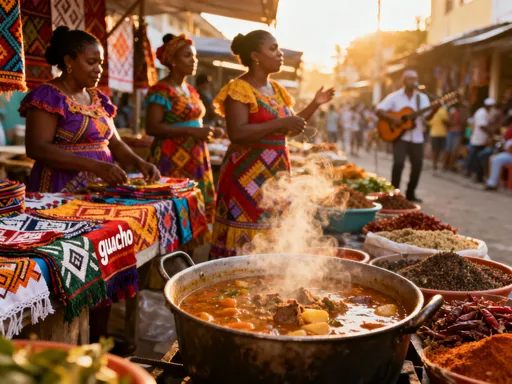
The next morning, I set out for Area 3 Market, one of Abuja’s most vibrant hubs of daily commerce. If the city’s skyline speaks of progress, the market speaks of life—raw, colorful, and unfiltered. From the moment I stepped into the labyrinth of stalls, I was surrounded by a sensory feast. Mounds of red bell peppers glistened under the sun, baskets overflowed with okra, and plantains of every ripeness—green, yellow, nearly black—sat in neat pyramids. The air buzzed with chatter, the clatter of scales, and the occasional burst of laughter as vendors bantered with regulars.
What struck me most was the pride with which the sellers spoke of their produce. One woman, her head wrapped in a bright gele, held up a bundle of scent leaves—known locally as efirin—and described how they elevate soups and stews. Another demonstrated the perfect way to pick a ripe ugu leaf, essential for bitter leaf soup. These weren’t just ingredients; they were storytellers, each with a role in the day’s meals. I watched as a young boy carried a tray of live snails to a cook, their shells glistening with dew. Even the water sold here was different—poured from clay pots that kept it cool without refrigeration, a small but powerful nod to tradition.
I was invited to taste a few raw samples, an unexpected but welcome gesture. A vendor handed me a tiger nut drink, kunun aya, creamy and subtly sweet, made from soaked and blended tubers. Then came slices of unripe mango dusted with chili and salt—a shock to the palate, both sour and fiery, yet utterly addictive. These small moments of generosity broke down barriers. I wasn’t just observing; I was participating. The market wasn’t just a place to buy food; it was a living classroom, where every transaction came with a lesson, a smile, or a shared laugh. By the time I left, my tote bag was full of ingredients, but my mind was full of stories.
Suya After Sunset: Chasing the Smoky Aroma Across the City
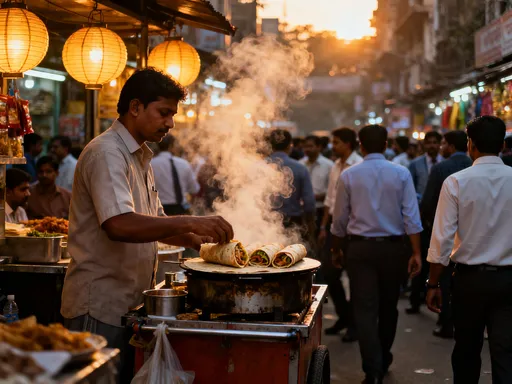
As the sun dipped below the horizon, Abuja transformed. The daytime heat softened, and the city’s nightlife began to stir—not in nightclubs or bars, but in the glow of open flames. I followed the trail of smoke and spice, drawn to the suya spots that sprang up like stars across the urban landscape. These were not restaurants, but humble setups: metal grills perched on bricks, flames licking at skewers of beef, and men in soiled aprons moving with the precision of artists. The air was thick with the scent of smoked paprika, ginger, and the secret blend known as yaji—a spice mix that varies from vendor to vendor but always delivers heat and depth.
I stopped at a popular corner in Garki, where a man named Ibrahim had been grilling suya for over twenty years. He showed me how he thinly slices the beef, marinates it lightly, then layers it on the skewer, allowing the fat to render and baste the meat as it cooks. The real magic, he said, happens in the final minutes, when he dusts the skewers with yaji and lets them char just enough to lock in flavor. He handed me a stick, wrapped in paper, with a side of sliced onions and tomatoes. The first bite was a revelation—tender, smoky, spicy, with a crust that crackled between my teeth. It was messy, fingers greasy, eyes watering from the heat, but utterly delicious.
As I ate, a group of young men joined me on the plastic stools, sharing skewers and bottles of malt drink. We didn’t speak much at first, but food broke the ice. One offered me a taste of his extra spicy portion, another explained how suya is more than street food—it’s a social ritual, a way to connect after work, to celebrate, or simply to unwind. I learned that some people have their favorite suya spot, visiting the same vendor for years, building relationships over shared meals. In that moment, under a flickering streetlamp, I didn’t feel like a tourist. I felt like I belonged. Suya, I realized, isn’t just about meat and spice. It’s about community, one skewer at a time.
Breakfast Like a Local: Injera? No—It’s Akara and Moin Moin at Asokoro Hub
If suya defines Abuja’s nights, then akara and moin moin are the heartbeat of its mornings. I discovered this at a roadside eatery in Asokoro, a well-to-do district where businesspeople, drivers, and civil servants gather before the workday begins. The spot had no name, just a canopy, a few stools, and a woman in a colorful wrapper stirring a large pot of bean batter over a gas flame. The air was rich with the scent of frying akara—golden, puffy bean fritters—and the earthy aroma of moin moin steaming in small bowls covered with banana leaves.
I ordered a plate of both, served with a spicy pepper sauce and a slice of fresh bread. The akara were light and crisp on the outside, fluffy within, made from blended black-eyed peas, onions, and a pinch of salt. The moin moin, a steamed bean pudding, was smooth, custard-like, and subtly savory. Together, they formed a perfect balance—crunchy and soft, warm and cool, simple yet deeply satisfying. I watched as a schoolteacher ate hers with careful bites, a driver gulped his down between sips of tea, and a young mother fed small pieces to her child. This was not fast food in the Western sense; it was nourishment, tradition, and routine all in one.
When I asked the vendor about the difference between street versions and homemade ones, she laughed and said, “Here, we cook like at home—but faster.” She explained that many families still make akara and moin moin from scratch, especially on weekends, but the convenience of roadside spots makes them a daily staple. What surprised me was the nutritional wisdom behind the meal. Black-eyed peas are rich in protein and fiber, making this breakfast both filling and energizing—ideal for long days in a demanding city. In a world where breakfast is often rushed and processed, Abuja’s morning ritual felt like a quiet act of resistance, a return to real food, shared in community, and deeply rooted in culture.
Hidden Eats: The Unmarked Door That Led to the Best Jollof I’ve Ever Had
One of the most memorable meals of my trip came not from a guidebook or a review, but from a conversation with a taxi driver named Musa. After a long day of sightseeing, he noticed me scanning restaurant signs and asked, “You looking for real food?” I nodded, and without another word, he drove me to a quiet residential street in Jabi. We stopped in front of a house with no sign, just a wooden gate slightly ajar. Inside, a small dining area had been set up under a thatched roof, with plastic chairs and a chalkboard menu written in marker.
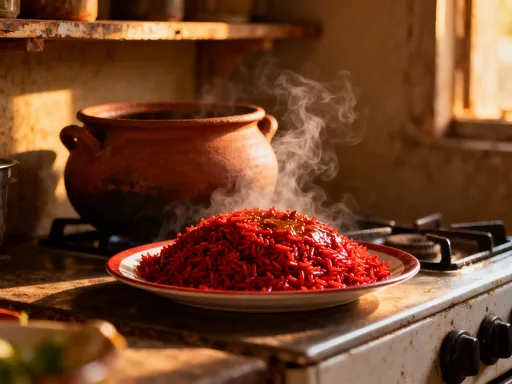
This was Mama Nkechi’s Kitchen, a home-style eatery run by a retired teacher who decided to share her cooking with the neighborhood. I was handed a plate of jollof rice before I even ordered—steaming, fragrant, with a deep red hue from tomatoes and palm oil. The first bite stopped me in my tracks. The rice was perfectly cooked, each grain separate yet infused with flavor. The sauce was rich, with a hint of thyme and a slow-building heat from scotch bonnet peppers. It was smoky, slightly tangy, and utterly complex—nothing like the jollof I’d tried elsewhere.
Mama Nkechi herself came out to greet me, wiping her hands on an apron. She explained her method: slow-simmering the rice in a pot over low heat, stirring occasionally, and never lifting the lid until the rice is done. “The secret,” she said with a wink, “is patience and palm oil.” She also added that she uses locally grown long-grain rice, not the imported kind, which holds up better during cooking. As I ate, others arrived—families, couples, solo diners—all regulars who knew they were getting something special. I understood then why Nigerians are so passionate about their jollof. It’s not just a dish; it’s a point of pride, a symbol of home, and in this unmarked kitchen, I had found its purest form.
Modern Twists: How Abuja’s Upscale Restaurants Are Reinventing Tradition
While street food and home kitchens reveal the soul of Abuja’s cuisine, the city’s upscale dining scene shows its evolution. I experienced this at a stylish lounge in Central Area, where traditional dishes are reimagined with modern techniques and presentation. The restaurant, tucked behind a quiet courtyard, had soft lighting, linen tablecloths, and a menu that read like poetry: plantain-wrapped fish with tamarind glaze, pounded yam with truffle-infused soup, and a dessert of coconut moin moin with mango coulis.
I ordered the plantain-wrapped fish, a creative take on a classic. Ripe plantains were flattened, filled with seasoned tilapia, and grilled until caramelized, then served with a spicy pepper sauce that had been strained and drizzled like fine art. The flavors were familiar—sweet, smoky, spicy—but the presentation elevated the experience. It felt like honoring tradition while inviting it into a new era. I spoke with the chef, a young woman trained in Europe, who said her goal was not to replace traditional food, but to celebrate it in new ways. “Our heritage is rich,” she said. “Why not show it off?”
What impressed me most was the balance. These dishes didn’t feel gimmicky or disconnected. They respected the roots while embracing innovation. I saw younger diners—Nigerians in their twenties and thirties—ordering these dishes with pride, taking photos, and sharing them online. It was clear that for them, eating modern Nigerian cuisine wasn’t just a meal; it was an expression of identity. In a city that values both progress and tradition, this culinary fusion makes perfect sense. It’s not about choosing between old and new, but finding harmony between them—one beautifully plated dish at a time.
Why Food Is the True Guide to Abuja’s Soul
Looking back on my journey, I realize that the monuments I passed, the parks I walked through, and the museums I visited—all were important, but none touched me as deeply as the meals I shared. Food was my guide, my translator, and my bridge to connection. Every plate opened a door: to stories, to laughter, to the quiet pride of a vendor, the warmth of a shared table, the patience of a grandmother stirring a pot. In Abuja, eating is not a solitary act; it’s a communal ritual, a way of saying, “You are welcome here.”
I learned that Nigerian hospitality is served with food. Whether it’s a stranger offering a taste of suya, a driver guiding you to a hidden kitchen, or a chef redefining tradition with care, the message is the same: come, sit, eat, belong. This is especially meaningful for travelers, particularly women in their thirties to fifties who seek not just sights, but meaningful experiences—moments of connection, authenticity, and warmth. Abuja delivers that in every bite.
More than that, food here carries history. The spices, the techniques, the ingredients—they speak of generations, of resilience, of a culture that values flavor as much as family. To taste jollof rice is to taste celebration. To eat akara at dawn is to join the rhythm of daily life. To share suya under a streetlamp is to become part of a story that has been unfolding for decades. In a world where travel can sometimes feel transactional, Abuja reminds us that the most powerful experiences are often the simplest: a warm plate, a kind word, a moment of shared humanity.
So if you ever find yourself planning a trip to Nigeria’s capital, skip the generic tours. Don’t just see Abuja—taste it. Follow the scent of grilled meat, step into the market, accept the invitation to a home kitchen. Let your curiosity lead you, and your appetite guide your way. Because in Abuja, the true landmarks aren’t made of stone or steel. They’re served on plates, shared with smiles, and remembered long after the journey ends. To eat in Abuja is not just to satisfy hunger—it’s to understand a city, to feel its pulse, and to carry a piece of its spirit with you, one unforgettable bite at a time.