You Won’t Believe What I Discovered in Colón, Panama
I never expected Colón, Panama to hit me so hard—until I stepped into its streets and felt the rhythm of Caribbean beats mixed with Afro-Antillean soul. This isn’t just a transit point for the Panama Canal; it’s a cultural crossroads bursting with color, music, and untold stories. From San Blas weavings to Creole kitchens steaming with guacho stew, every corner pulses with authenticity. If you're chasing real, raw culture beyond the tourist trail, Colón delivers in ways you can’t fake.
Reimagining Colón: More Than Just a Canal Gateway
Colón is often reduced to a footnote in Panama’s travel narrative—a quick stop for cruise passengers disembarking near the Atlantic entrance of the Panama Canal. Yet beneath this narrow perception lies a city of profound historical depth and cultural convergence. Far from being a mere logistical hub, Colón emerged as a vital junction where continents, economies, and identities collided and coalesced. Its foundation was shaped by global movements: the construction of the Panama Railroad in the 1850s, followed by the French and later American efforts to build the canal. Each phase brought waves of laborers, traders, and dreamers from across the Caribbean, Central America, and beyond.
The city’s demographic tapestry reflects this layered past. According to Panama’s National Institute of Statistics and Census, Afro-Panamanians make up nearly 15% of the national population, with a significant concentration in Colón Province. Many trace their ancestry to English-speaking islands like Jamaica, Barbados, and Trinidad, where workers were recruited under colonial labor systems to build infrastructure vital to global trade. These migrants brought not only physical strength but linguistic traditions, religious practices, culinary customs, and musical forms that took root in Colón’s soil. Simultaneously, Indigenous Guna communities from the San Blas Islands maintained long-standing trade routes through the city, exchanging handcrafted goods and marine products for mainland supplies.
This confluence created a unique urban identity—one that resists easy categorization. Unlike Panama City’s cosmopolitan blend of Latin American and global influences, Colón’s character is distinctly Caribbean in tone, rhythm, and flavor. The city became a place where Spanish, English, and San Blas Kuna coexisted; where Protestant churches stood alongside Catholic parishes; where rice and peas simmered alongside sancocho. To walk through Colón is to witness a living archive of migration, resilience, and adaptation. Recognizing this complexity transforms how one sees the city—not as a passive waypoint, but as an active participant in shaping Panama’s national story.
The Pulse of Afro-Antillean Heritage in Daily Life
In Colón, culture is not preserved behind glass cases or performed on stage for tourists—it lives in the everyday. From the cadence of conversation to the scent of frying plantains at dawn, the Afro-Antillean presence permeates daily rhythms. One of the most immediate markers is language. In neighborhoods like Old Bank and Cristobal, it’s common to hear Panamanian Creole English, a dialect rooted in 19th-century Jamaican Patois but uniquely evolved over generations. Phrases like “Wha’ gwaan?” (What’s going on?) or “Mi deh ya” (I’m here) echo in homes, markets, and street corners, serving as linguistic anchors to a shared heritage.
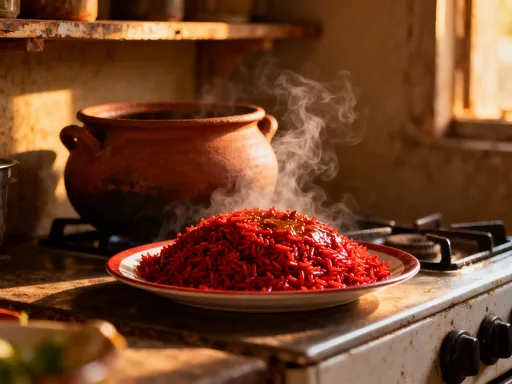
Culinary traditions offer another powerful expression of identity. In family-run kitchens, recipes passed down through matriarchs define what it means to eat like a Colónite. Dishes such as *guacho*—a hearty seafood stew made with coconut milk, yams, and smoked fish—are more than meals; they are edible histories. The use of coconut milk, a staple in West African and Caribbean cooking, speaks to ancestral connections across the Atlantic. Similarly, breakfast often features *hard dough bread*, a dense, slightly sweet roll baked fresh each morning, typically served with cheese or fried fish. Local bakeries, some operating for decades, continue to produce *pone*—a moist, spiced cake made with coconut, sweet potato, or banana—using methods unchanged since the early 20th century.
Religious life also reflects this cultural continuity. Many residents belong to Protestant denominations such as Seventh-day Adventist, Anglican, or Pentecostal churches, a legacy of British missionary activity in the Caribbean. Sunday mornings bring gospel harmonies spilling into the streets, with choirs singing in both English and Spanish. Church gatherings often double as social events, where elders share stories and children learn hymns that carry both spiritual and cultural weight. These moments, though quiet and unassuming, reinforce a sense of belonging that has endured despite decades of marginalization.
Markets as Cultural Stages: Where Flavor, Fabric, and Folklore Meet
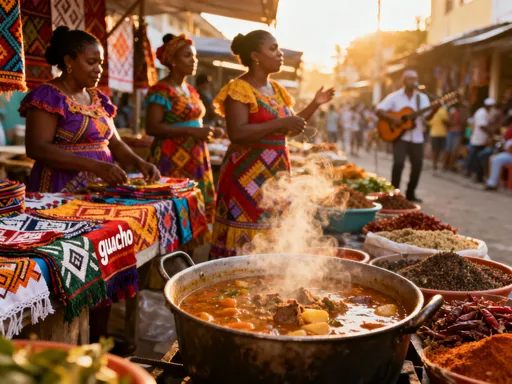
If Colón has a beating heart, it resides in its markets. These vibrant spaces are far more than places to buy food or souvenirs—they are dynamic stages where culture is performed, exchanged, and sustained. The Colón Free Zone Market, though primarily known for commerce, also hosts stalls selling handmade crafts, traditional garments, and regional delicacies. But it is the smaller, neighborhood markets—like those in Agua Clara or Diablo—where the true spirit of the city unfolds.
Here, vendors display dazzling arrays of *molas*, the intricate reverse-appliqué textiles created by Guna women. Each design tells a story—of nature, mythology, or daily life—stitched with precision and symbolic meaning. Nearby, baskets woven from palm fibers sit beside jars of locally harvested honey and bottles of *ají chombo*, a fiery pepper sauce used to season everything from soups to grilled meats. Spices like grains of paradise, once traded along transatlantic routes, still find their way into Creole kitchens, linking modern cooking to ancient African culinary roots.
Engaging with vendors reveals deeper layers of cultural transmission. Many are second- or third-generation sellers who learned their trade from parents or grandparents. They speak proudly of preserving family recipes or artisanal techniques, even as younger generations gravitate toward formal education or migration. One vendor in Diablo Market shared how her mother taught her to prepare *rondón*, a one-pot dish combining root vegetables, meat, and coconut milk, always seasoned with fresh herbs gathered from nearby hills. “This isn’t just food,” she said. “It’s memory. When my children eat it, they taste where we come from.”
These markets also function as informal archives. Elders gather to gossip, debate, and recount histories—of hurricanes, strikes, or festivals long past. Children absorb these narratives while helping fold clothes or weigh produce. In this way, markets become intergenerational classrooms, where knowledge flows organically and without fanfare. For visitors, approaching these spaces with respect—by asking permission before photographing, listening before speaking, and purchasing directly from artisans—ensures that engagement supports rather than exploits.
Music and Movement: Dancing Through Colón’s Streets
In Colón, music is not entertainment—it is survival, celebration, and memory all at once. The city’s soundscape pulses with rhythms that have traveled across oceans and centuries. Reggae, mento, calypso, and soca drift from open windows, backyard parties, and corner shops. On weekends, sound systems powered by local DJs blast bass-heavy mixes that draw neighbors into impromptu dance circles. These aren’t performances for tourists; they are expressions of community life, where drumbeats synchronize heartbeats and lyrics speak to both joy and struggle.
The tradition of street music has deep roots. During the canal construction era, West Indian laborers brought their musical forms as a form of resistance and solace. Songs carried coded messages about working conditions, love, and longing for home. Over time, these evolved into uniquely Panamanian expressions. One such genre is *punto fuerte*, a call-and-response style often performed during Carnival celebrations. Accompanied by drums, maracas, and güiros, *punto fuerte* singers engage in lyrical duels, testing wit and rhythm in front of cheering crowds.
Today, youth groups and cultural collectives are revitalizing these traditions. In community centers and church halls, teenagers learn drum patterns from elders, ensuring that ancestral rhythms do not fade. Annual events like the Colón Cultural Festival showcase local talent, featuring dance troupes in colorful costumes, steelpan ensembles, and spoken word artists weaving Creole poetry into modern beats. Even outside formal events, music remains a constant. A group of boys might tap rhythms on plastic buckets, mimicking conga patterns. A grandmother hums a mento tune while hanging laundry. These small acts keep the city’s soul alive.
For travelers, experiencing this musical culture requires presence, not performance. Attending a local festival, joining a dance circle with humility, or simply sitting quietly to listen can be transformative. The key is to participate as a guest, not a spectator. When music becomes a bridge rather than a spectacle, it fosters genuine connection.
Cultural Preservation Amid Urban Challenges
Despite its richness, Colón faces significant challenges that threaten the continuity of its cultural heritage. Economic hardship, aging infrastructure, and limited access to national resources have contributed to a sense of neglect. Many young people leave in search of education or employment, leading to concerns about the erosion of traditional knowledge. Historic buildings in the downtown area show signs of decay, and some neighborhoods lack reliable electricity or clean water. These conditions have, at times, led to negative stereotypes—painting Colón as dangerous or backward—despite its profound contributions to Panama’s identity.
Yet, within this context, resilience shines through. Grassroots initiatives are working to reclaim and revitalize Colón’s narrative. Community leaders have established oral history projects, recording elders’ memories of migration, labor, and celebration. Local artists have transformed abandoned walls into murals depicting Afro-Antillean heroes and Guna cosmology. In schools, teachers incorporate Creole language and Caribbean history into curricula, helping students see their heritage as valuable and worthy of pride.
One notable effort is the Colón Heritage Archive, a volunteer-run initiative digitizing photographs, audio recordings, and documents related to the city’s past. Founded by a retired teacher and a group of university students, the project aims to ensure that future generations have access to authentic stories, not just official accounts. Similarly, women’s cooperatives have formed to support artisanal production, providing income while preserving textile and culinary traditions.
These efforts are not about romanticizing poverty or struggle. They are about affirming dignity. Cultural preservation in Colón is not a museum project—it is an act of resistance against erasure. It is about saying: we were here, we are here, and our stories matter. For visitors, understanding this context adds depth to every interaction. It shifts the focus from exoticism to empathy, from observation to solidarity.
How to Experience Colón Authentically (Without Exploitation)
Traveling to Colón offers a rare opportunity to engage with a culture that remains largely untouched by mass tourism. But with that privilege comes responsibility. To experience the city authentically means moving beyond the mindset of the passive observer and embracing the role of the respectful guest. This begins with choosing how and with whom one travels. Locally led walking tours, often organized by former teachers, artists, or historians, provide insight that no guidebook can match. These guides speak not only about places but about people, sharing personal memories and community values.
Dining is another powerful way to connect. Instead of seeking out sanitized “tourist menus,” visitors are encouraged to eat at family-owned *fondas*—small, home-based restaurants where meals are prepared with care and conversation flows easily. Ordering *guacho* or *rondón* and asking about the ingredients opens doors to storytelling. Learning a few phrases in Creole English—like “Tank yu” (Thank you) or “How much cost?”—goes a long way in building rapport.
Photography should be approached with care. While the city’s colors and textures are undeniably striking, snapping pictures without consent reduces people to props. Asking permission before photographing individuals or private spaces shows respect. Better yet, spending time first—sharing a meal, listening to music, helping carry groceries—often leads to natural, consensual photo opportunities born of connection, not extraction.
Supporting local economies is equally important. Purchasing a *mola* directly from its maker, buying spices from a market vendor, or attending a community concert ensures that tourism dollars stay within the community. Avoiding large commercial outlets in favor of small enterprises helps sustain cultural practices that might otherwise disappear. Ultimately, authentic travel is not about checking boxes or collecting experiences—it is about building relationships grounded in mutual respect.
Why Colón Matters in Panama’s Cultural Landscape
Colón is not a footnote in Panama’s story—it is a central chapter. To understand the nation fully, one must recognize the Caribbean currents that flow through its history, language, and soul. While Panama City dazzles with skyscrapers and global connections, Colón reminds us of the human labor, cultural fusion, and quiet endurance that made modern Panama possible. It is a city where African, Indigenous, and Latin worlds meet not in conflict, but in collaboration.
For the traveler willing to listen, Colón offers transformation. It challenges assumptions about progress, beauty, and value. It teaches that culture is not always loud or polished—it can be found in the steam rising from a pot of stew, in the hum of a hymn, in the weave of a *mola*. These quiet moments carry immense power, precisely because they are lived, not staged.
The city also serves as a reminder that preservation is not passive. It requires intention, investment, and inclusion. When visitors engage with Colón as a place of dignity and depth, they contribute to a broader shift—one that honors marginalized voices and redefines what it means to travel well.
Some cultures don’t shout. They sing softly—and you have to lean in to hear their power. Colón sings with a voice shaped by the sea, the soil, and centuries of resilience. To visit is not just to see, but to witness. And in witnessing, to remember: that the most profound journeys are not measured in miles, but in moments of connection that change us from within.