You Gotta Taste This: Kolkata’s Street Food Scene in Its Beating Commercial Heart
Walking through Kolkata’s bustling commercial streets, I was hit by an intoxicating wave of spices, sizzling oil, and sweet jaggery. This city doesn’t just sell goods—it sells flavor, energy, and soul. From narrow market lanes to busy thoroughfares, every corner offers a food story waiting to be devoured. If you think you know Indian food, think again—Kolkata’s urban food culture is a league of its own. It’s not merely about sustenance; it’s about ritual, rhythm, and connection. The commercial districts pulse with life, and at the heart of that pulse is food—steaming, fragrant, and deeply embedded in daily existence. Here, a meal is never just a meal. It’s a pause, a conversation, a celebration of tradition in motion.
The Pulse of Kolkata: Where Commerce Meets Cuisine
Kolkata’s commercial districts are not just centers of trade—they are living, breathing culinary landscapes where the rhythms of business and food intertwine. Places like Chowringhee, New Market, and Esplanade are more than shopping destinations; they are sensory experiences shaped by the sizzle of street griddles, the clatter of steel plates, and the calls of vendors hawking their specialties. These areas serve as economic engines by day, but they transform into gastronomic hubs as workers, shoppers, and delivery personnel gather around shared food experiences. The city’s energy flows through its markets, and food acts as both fuel and connector, binding people across professions and backgrounds.
What makes Kolkata’s commercial zones unique is how seamlessly food integrates into the urban fabric. Unlike cities where dining is compartmentalized into restaurants or food courts, here, meals unfold on sidewalks, in alleyways, and at makeshift stalls wedged between boutiques and office buildings. A bank employee on a lunch break stands shoulder to shoulder with a shopkeeper grabbing a quick bite, both eating from the same puchka vendor. This shared culinary culture fosters a sense of community, where status dissolves in the face of a common craving. The commercial heartbeat of the city beats strongest not in boardrooms, but around steaming baskets of dumplings and trays of freshly fried snacks.
The synergy between commerce and cuisine is also evident in the timing and flow of daily life. Morning foot traffic is dominated by office-goers and delivery riders, many of whom begin their day with a cup of masala chai and a savory snack. By midday, the pace quickens, and food stalls near corporate offices see a surge in customers seeking fast, satisfying meals. Evenings bring a different rhythm—families emerge, streets light up, and the food scene shifts from efficiency to leisure. This seamless transition from work to pleasure, all centered around food, underscores how deeply nourishment is woven into the city’s commercial identity.
Morning Markets and Masala Tea: Starting the Day Right
The rhythm of Kolkata’s commercial life begins before sunrise, when the first vendors set up their stalls and the aroma of freshly brewed masala chai fills the cool morning air. In neighborhoods like Burrabazar and Gariahat, market workers, delivery personnel, and early risers gather around small tea kiosks that double as social hubs. These roadside chai stalls are more than places to drink—they are spaces of conversation, connection, and quiet reflection before the day’s demands take over. A steaming cup of milky, spiced tea, served in a clay kulhad, is not just a beverage; it’s a ritual that grounds the city’s workforce.
Breakfast in these commercial zones is simple but deeply satisfying. Vendors offer freshly made kachoris—crispy, golden pastries filled with spiced lentils or potatoes—served with tangy tamarind chutney. Others specialize in mishti doi, a creamy, caramel-topped yogurt sweetened with jaggery, sold in small earthen pots that enhance the flavor. These foods are designed for convenience and comfort, providing slow-releasing energy to sustain long hours of physical or mental labor. For many, the morning meal is not eaten at home but on the go, a testament to how food culture adapts to urban life.
The role of these early food rituals extends beyond nutrition. They create a sense of belonging among those who start their day in the same place, often returning to the same vendor for years. A tea stall owner might remember a customer’s preferred sweetness level or keep a spare spoon ready for the regulars. This personal touch transforms a simple transaction into a moment of warmth and familiarity. In a fast-paced city, these small interactions offer stability and human connection. The morning food scene in Kolkata’s commercial heart is not just about feeding bodies—it’s about nourishing the spirit before the workday begins.
Lunchtime Rush: Street Food as Office Fuel
As the sun climbs higher, Kolkata’s business districts come alive with the midday surge of office workers seeking quick, flavorful meals. The streets around Park Street, Camac Street, and the New Market area become a maze of food stalls, each offering a variety of portable, satisfying options. This is the golden hour for street vendors, who serve hundreds of customers in a short window. The demand is high, but so is the quality—many of these stalls have been operating for decades, refining their recipes and building loyal followings based on consistency and taste.
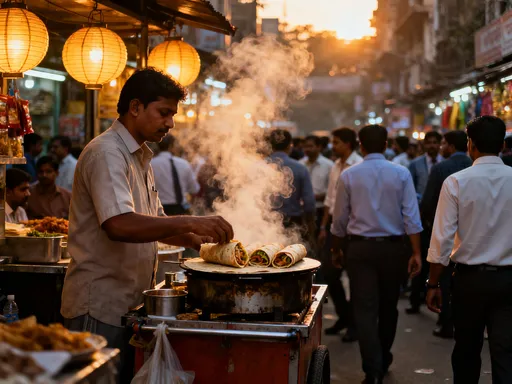
One of the most iconic lunchtime offerings is the kathi roll, a handheld delight that originated in Kolkata and has since gained national fame. Skewer-grilled meat or spiced vegetables are wrapped in a flaky paratha, often with onions, chutney, and a squeeze of lime. It’s designed for efficiency—easy to eat while walking, packed with protein and flavor, and usually ready within minutes. Puchkas, the city’s version of pani puri, are another favorite. These hollow, crispy shells are filled with a mixture of spiced potato and chickpeas, then drenched in a tangy, mint-flavored water that delivers a burst of flavor with every bite. For those seeking something heartier, chana pulao—spiced chickpeas served with fragrant rice—is a popular vegetarian option.
Hygiene and freshness are critical concerns for office workers, and the busiest stalls often address these intuitively. High turnover means ingredients are used quickly, reducing the risk of spoilage. Many vendors prepare food to order, using clean cloths to handle wrappers and maintaining visible cleanliness. Some even display their spice blends in glass jars, signaling transparency and pride in their craft. While formal health certifications may be rare, customers rely on visual cues—crowds, cleanliness, and the vendor’s reputation—to determine where to eat. The most popular stalls are usually the ones with the longest lines, a natural indicator of trust and quality.
Hidden Eateries in Plain Sight: The Rise of Hole-in-the-Wall Gems
Scattered between office buildings and retail shops are tiny eateries that defy expectations. These hole-in-the-wall establishments often lack signage, seating, or even a proper storefront, yet they draw crowds that snake down the block. They are the unsung heroes of Kolkata’s food scene—family-run operations passed down through generations, where a single dish is perfected over decades. One such spot might be known only for its kochuri and aloor dom, another for its flaky meat parathas, and yet another for a secret-recipe fish curry served with steamed rice.
What sets these hidden gems apart is authenticity. Without the pressure to appeal to tourists or modernize their offerings, these vendors focus solely on flavor and tradition. A grandmother might still hand-roll dough each morning, or a father-son team might manage the entire operation from prep to service. Their menus are minimal, sometimes consisting of just one or two items, but each dish is executed with precision and care. Customers return not for variety, but for the consistency of taste—the same burst of spice, the same perfect texture, year after year.
These eateries thrive on word-of-mouth and local loyalty. There are no social media campaigns or flashy interiors—just food so good that people make time in their busy schedules to visit. Some operate only during specific hours, closing once the day’s supply runs out. This scarcity adds to their allure, creating a sense of urgency and exclusivity. For food-loving travelers, discovering one of these spots is like uncovering a secret, a genuine slice of Kolkata’s culinary soul that exists far from the tourist trail.
Sweet Stops: The Role of Mithai in Kolkata’s Commercial Culture
No exploration of Kolkata’s food culture is complete without acknowledging its deep affection for mithai—traditional Indian sweets that play a central role in both daily life and special occasions. In commercial areas, sweet shops like Ganguram, KC Das, and local unnamed stalls are more than dessert destinations—they are symbols of hospitality and celebration. A transaction at a wholesale market might end with the exchange of a few rasgullas; a successful business deal could be sealed with a box of sandesh. These sweets are not indulgences; they are gestures of goodwill, woven into the fabric of professional and personal relationships.
The city’s most famous sweet, the rasgulla, is a soft, spongy cheese ball soaked in light sugar syrup, originally from Bengal and now recognized as a regional specialty. Sandesh, made from fresh chhena (cottage cheese), comes in countless variations—some plain, some flavored with cardamom or saffron, others studded with nuts. Cham cham, with its pink hue and coconut coating, and langcha, a fried sweet dumpling from Bardhaman, are also local favorites. These mithai are not overly rich; their sweetness is balanced, allowing the delicate flavors of milk, nuts, and spices to shine.
What makes these sweets culturally significant is their role in connection. They are shared during festivals, given as gifts, and used to mark milestones. Even in the fast-paced environment of a business district, a small packet of mithai can pause a conversation, invite a smile, and strengthen a bond. For visitors, tasting these sweets is not just a culinary experience—it’s an entry into the city’s emotional language, where generosity is expressed through sugar, milk, and time-honored recipes.
Evening Transitions: From Work to Wander, Snacks to Feasts
As daylight fades, Kolkata’s commercial streets undergo a transformation. Office lights dim, but the food scene brightens. Temporary stalls spring up along sidewalks, their oil lamps and string lights casting a warm glow over sizzling griddles and steaming pots. The air fills with the scent of frying bajjis—crispy fritters made from vegetables dipped in chickpea batter—and grilled kebabs marinated in yogurt and spices. This is the city’s second mealtime, not driven by necessity, but by pleasure.
Families, couples, and groups of friends take to the streets, turning dinner into a social event. Parents bring children to try puchkas, teenagers gather around chaat stalls, and older couples share plates of churmur—a spicy, tangy mix of leftover kathi roll pieces topped with chutneys and spices. The pace slows, the mood lightens, and food becomes a form of entertainment. Vendors, now relaxed after the lunch rush, engage in banter with customers, adding to the festive atmosphere.
Some areas, like Shyambazar and College Street, become pedestrian zones in the evening, allowing people to stroll and sample without the rush of traffic. Tea stalls switch from morning chai to evening specials like doodh patti (strong milk tea) or nimbu pani (lemonade with a pinch of salt). The shift from work to leisure is seamless, and food acts as the bridge. Unlike formal dinners, these street meals are communal, casual, and full of joy. They reflect a culture that values time with loved ones and finds delight in simple pleasures.
Navigating the Scene: Practical Tips for Food-Loving Travelers
For visitors eager to explore Kolkata’s street food culture, a few practical tips can enhance both safety and enjoyment. The best time to experience the full spectrum of flavors is between 7:00 and 9:00 a.m. for breakfast, 12:30 to 2:00 p.m. for lunch, and 6:30 to 9:00 p.m. for evening snacks. These peak hours ensure high turnover, which correlates with freshness and quality. Look for stalls with long lines of locals—this is often the most reliable indicator of a good, safe option.
Cash is still the primary mode of payment at most street vendors, so carrying small bills is advisable. While some popular spots may accept digital payments, many operate on a cash-only basis. It’s also wise to carry hand sanitizer or wipes, as public restrooms and handwashing stations may be limited. Observing basic hygiene—such as watching how food is handled and whether vendors use clean utensils—can help make informed choices.
Spice levels in Kolkata’s street food can vary, so newcomers should start with milder options and gradually explore bolder flavors. Asking for “less spicy” is generally respected, though communication may require gestures or simple phrases. Respecting local norms, such as eating with the right hand when appropriate and avoiding public displays of waste, goes a long way in building rapport with vendors and fellow diners.
Finally, embracing the chaos with curiosity is key. The streets are crowded, the noise is constant, and the choices are overwhelming—but that’s part of the experience. Letting go of rigid expectations and allowing the city to guide your palate leads to the most authentic discoveries. Whether it’s a decades-old kathi roll stall or a grandmother selling mishti doi from a wooden cart, the heart of Kolkata’s food scene beats strongest in its unscripted moments.
Kolkata’s commercial streets are more than economic engines—they’re flavor-packed arteries feeding the city’s spirit. To eat here is to connect with its rhythm, history, and heart. This is not just food; it’s urban poetry on a plate.